Floor plans have been a standard part of property listings in the UK and Australia for years. In the US market, they are becoming increasingly common — and the data on their impact is compelling. Listings that include a floor plan receive 30% more enquiries on average, and buyers spend significantly longer on those listings than on photography-only pages. The question is no longer whether to include a floor plan, but what kind.
The Problem with Flat 2D Floor Plans
A standard 2D floor plan — boxes, labels, and dimensions — is useful for trained professionals. For the average buyer, it is largely unreadable. Research by Rightmove found that while 80% of buyers say they want to see a floor plan, only 32% feel they can accurately visualise the space from a flat diagram alone. The plan provides orientation (where the rooms are relative to each other) but fails to communicate atmosphere, scale, and livability.
What 3D Isometric Floor Plans Add
A 3D isometric render of the same floor plan shows the property from a fixed 45° overhead angle — every room visible at once, walls at realistic heights, furniture placed to scale. Buyers immediately understand room sizes, ceiling heights, and how the spaces connect. More importantly, they can picture themselves in the space.
- Buyers understand layout immediately without architectural training
- Room sizes and proportions feel real, not abstract
- The flow between rooms (kitchen → dining → living) is visible at a glance
- Furniture placement gives a sense of livable scale
- 3D renders are shared on social media at significantly higher rates than flat plans
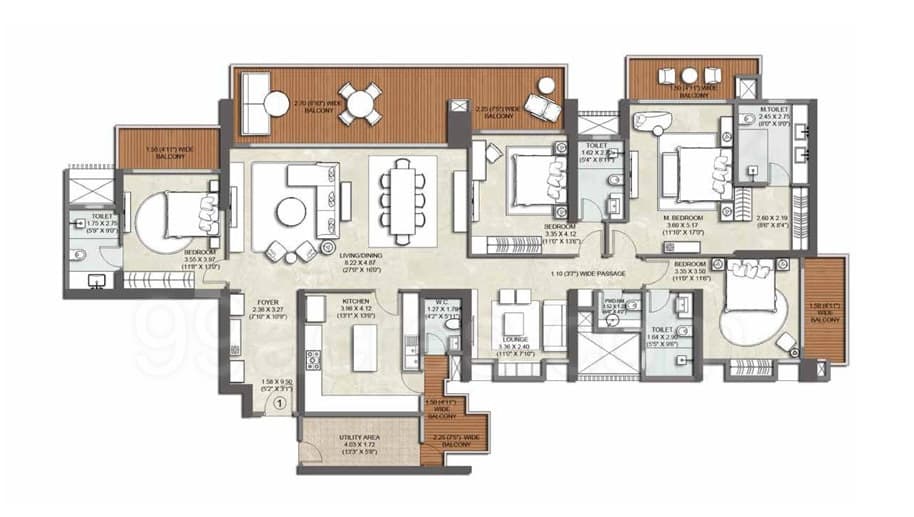 Before
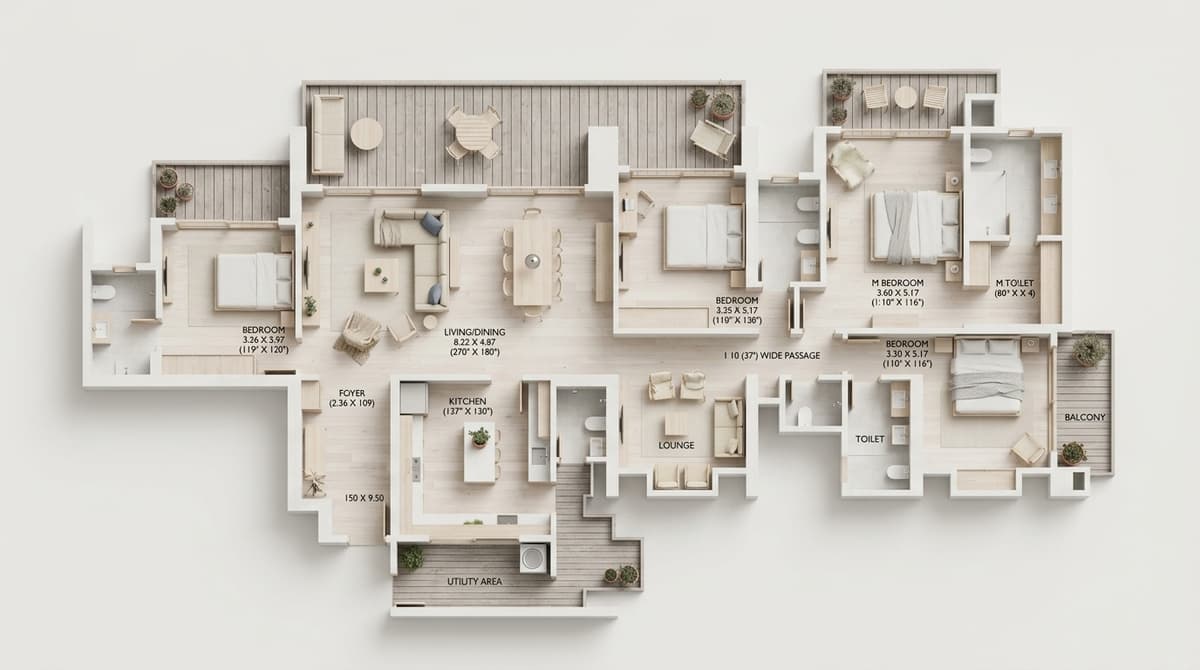 After
AfterThe Styling Layer: Showing the Same Plan in Multiple Finishes
The most powerful use of 3D floor plan renders is not producing a single neutral image — it is generating multiple styled versions of the same plan to speak to different buyer segments. A two-bedroom apartment might be shown in a calm Japandi finish for young professional buyers, a warm Coastal Retreat scheme for holiday-home purchasers, and a polished Modern Luxury aesthetic for investors targeting the premium rental market.
Each version uses the same floor plan geometry. Only the materials, palette, and furnishing style change. With AI, generating all three takes under three minutes — versus days or weeks with a traditional visualisation studio.
Off-plan developers in Dubai, London, and Sydney have been using styled 3D renders as primary sales tools for years. AI now makes the same quality of asset available to individual agents and small developers at a fraction of the cost.
Before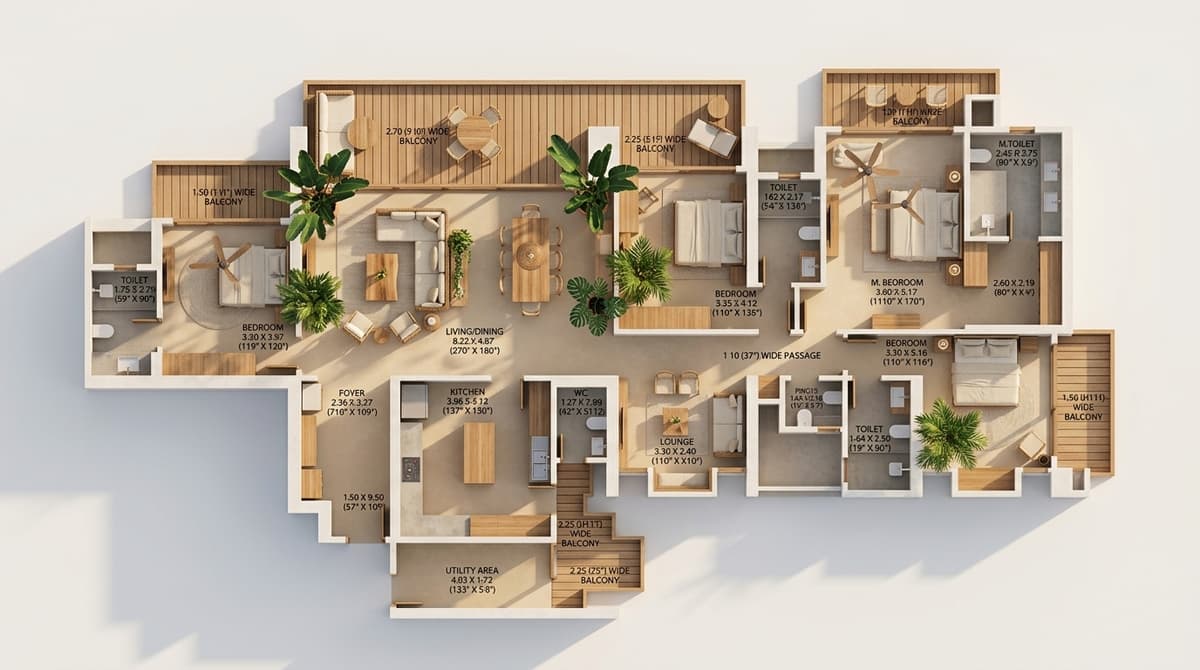 After
AfterWhen to Use 3D Floor Plan Renders in Your Listing
Off-Plan and New-Build Properties
This is where 3D renders deliver the highest ROI. When nothing has been built yet, a styled isometric render is often the most compelling visual in the entire marketing pack. It gives buyers a concrete image to connect with emotionally — something a flat plan or a rendering of the exterior alone cannot achieve.
Vacant Properties
Empty rooms photograph poorly. A 3D render of the floor plan with furniture shown to scale helps buyers understand the potential of the space without needing to physically stage it.
Properties with Strong Layout as a Selling Point
Open-plan layouts, split-level configurations, or unusually large rooms are selling points that photography often undersells. A 3D render makes these spatial advantages immediately legible.
How Agents Are Using InstantRoom for Floor Plan 3D
- Photograph the floor plan from the developer's brochure or the architectural drawings.
- Upload to InstantRoom and select "Floor Plan 3D" mode.
- Generate a neutral render first to verify the AI has correctly interpreted the layout.
- Generate 2–3 styled versions (e.g. Scandinavian, Modern Luxury, Coastal) for different marketing channels.
- Use the neutral render on MLS for professional presentation; use styled renders on Instagram, Facebook, and developer marketing decks.
Cost Comparison: 3D Render Studio vs AI
| Method | Cost per render | Turnaround | Style variants |
|---|---|---|---|
| Traditional 3D studio | $300–$1,500 per image | 3–10 business days | $300+ per additional style |
| Freelance visualiser | $150–$500 per image | 2–5 business days | $150+ per additional style |
| InstantRoom AI | From $0 (free tier) | Under 60 seconds | Included — unlimited styles |
For agents managing multiple listings, the economics are straightforward. A single listing might need 3–4 styled renders for a complete marketing pack. At studio rates, that is $900–$6,000 per property. With AI, it is a matter of minutes and a fraction of the cost.
Getting Started
InstantRoom's Floor Plan 3D mode works with any floor plan: hand-drawn sketches, printed architectural drawings, PDF screenshots, or developer brochure plans. Upload the image, select a style (or leave it blank for a neutral render), and receive a 3D isometric visualisation in under 60 seconds. The first generation is free — no credit card required.